
Introduction
Noise and unwanted echoes can affect the comfort and functionality of any space. Whether you are designing a recording studio, office, home theatre, auditorium, or commercial environment, proper acoustic treatment can make a significant difference. Acoustic foam is one of the most popular materials used to improve indoor sound quality by absorbing sound reflections.
At URBAN-X, we provide acoustic solutions designed for a variety of residential, commercial, and industrial applications. In this guide, we will explore what acoustic foam is, how it works, its benefits, and how to choose the right solution for your project.
What Is Acoustic Foam?
Acoustic foam is a specially designed sound-absorbing material, commonly manufactured from open-cell polyurethane foam. Its porous structure allows sound waves to enter the material, where some of their acoustic energy is converted into a small amount of heat through friction.
Unlike ordinary foam, acoustic foam is designed to help manage sound reflections and reduce excessive reverberation within a room. It is available in different thicknesses, densities, and surface patterns to suit various acoustic requirements.
Common acoustic foam designs include pyramid, wedge, grid, and custom-cut patterns.
How Does Acoustic Foam Work?
When sound waves travel through a room, they reflect off hard surfaces such as concrete walls, glass, ceilings, and floors. These repeated reflections can create echo and reverberation, making speech and audio less clear.
Acoustic foam helps absorb some of these reflections, particularly across the frequencies for which the material is designed.
The performance of acoustic foam depends on several factors:
- Thickness: Thicker foam can generally absorb lower frequencies more effectively than thinner foam, although performance depends on the material and installation.
- Density and structure: Foam composition and cell structure influence its acoustic performance.
- Installation location: Treating reflection points and other suitable surfaces can improve the overall acoustic balance.
- Room characteristics: Room size, geometry, existing materials, and sound sources all affect the final result.
It is important to understand that acoustic foam primarily improves sound absorption inside a space. It does not, by itself, provide complete soundproofing against outside noise.
Key Benefits of Acoustic Foam
1. Reduces Echo and Reverberation
Acoustic foam absorbs a portion of reflected sound energy, helping reduce excessive echo and reverberation in rooms with hard surfaces.
2. Improves Speech Clarity
In conference rooms, classrooms, offices, and auditoriums, excessive reflections can make speech difficult to understand. Appropriate acoustic treatment helps create a clearer listening environment.
3. Enhances Recording Quality
Recording studios, podcast rooms, and voice-over booths benefit from controlled reflections. Acoustic foam can help reduce unwanted room coloration and improve the quality of recorded speech and audio.
4. Supports Home Theatre Acoustics
In home theatres and entertainment rooms, acoustic treatment can help manage reflections and improve listening comfort when designed as part of a complete room-acoustics plan.
5. Offers Flexible Installation Options
Acoustic foam is available in multiple patterns, thicknesses, and sizes, making it suitable for a wide range of acoustic treatment projects.
Types of Acoustic Foam
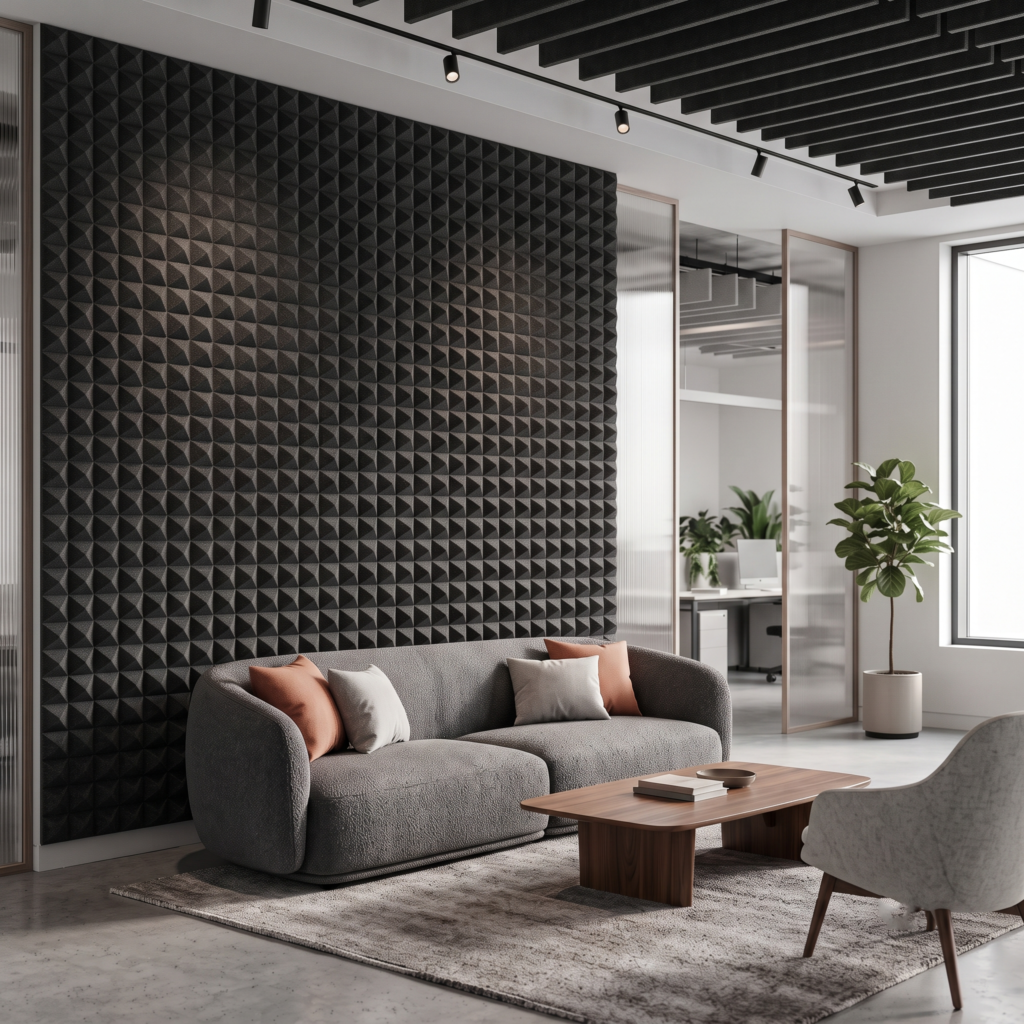
Pyramid Acoustic Foam
Pyramid acoustic foam features a raised pyramid-shaped surface that increases the exposed surface area. It is commonly used in recording rooms, studios, podcast spaces, and other environments requiring reflection control.
Wedge Acoustic Foam
Wedge foam has a series of angled ridges across its surface. It is a popular choice for studios, rehearsal spaces, and general-purpose acoustic treatment.
Grid Acoustic Foam
Grid-pattern acoustic foam provides a distinctive surface design and can be used in suitable rooms where sound absorption and appearance are both important.
Custom Acoustic Foam
Custom-cut acoustic foam can be manufactured in different shapes and dimensions to meet specific project requirements. It is useful for specialised acoustic applications, product enclosures, and customised installations.
Where Is Acoustic Foam Used?
Acoustic foam can be used in many environments where controlling reflected sound is important.
- Recording studios: Helps control reflections during recording and monitoring.
- Home theatres: Supports a more controlled listening environment.
- Offices and meeting rooms: Helps reduce reverberation and improve speech intelligibility.
- Auditoriums: Can contribute to better acoustic conditions when incorporated into an appropriate acoustic design.
- Podcast and streaming rooms: Helps manage room reflections for clearer recordings.
- Educational facilities: Can support speech clarity in classrooms and learning spaces.
- Commercial interiors: Provides sound absorption in selected areas where acoustic treatment is required.
The right product and installation method depend on the room’s intended use and acoustic requirements.
How to Choose the Right Acoustic Foam
Before selecting acoustic foam, consider the following factors.
Identify Your Acoustic Problem
Determine whether your main concern is echo, excessive reverberation, poor speech clarity, or sound transmission from another room. Acoustic foam is primarily intended for sound absorption, while sound transmission problems usually require a different approach.
Select the Appropriate Thickness
Acoustic foam is available in different thicknesses, including 25 mm and 50 mm options. Thicker foam may provide improved absorption at certain lower frequencies, but the actual results depend on the product’s tested performance.
Choose the Right Pattern
Pyramid, wedge, and grid patterns offer different surface geometries. Select a pattern based on the application’s needs, installation requirements, and visual preferences rather than appearance alone.
Check Technical Specifications
Review the product’s acoustic test data, density, dimensions, fire-performance documentation, and installation recommendations. Where available, look for frequency-specific absorption coefficients and the relevant test method.
Plan the Installation
Consider the surfaces that contribute most to unwanted reflections. Correct placement and suitable coverage are important for achieving effective acoustic treatment.
Acoustic Foam vs. Soundproofing: What Is the Difference?
Acoustic treatment and soundproofing solve different problems.
Acoustic foam absorbs some sound reflections inside a room. It is useful for managing echo and reverberation.
Soundproofing systems aim to reduce sound transmission between spaces or from external sources. These systems may require appropriate mass, airtight construction, isolation, and other building-design measures.
Materials such as Mass Loaded Vinyl (MLV) can form part of a sound-isolation system when used in a correctly designed assembly. However, no single material guarantees complete soundproofing in every application.
For the best results, identify the actual noise problem before choosing an acoustic solution.
Tips for Installing Acoustic Foam
- Identify the areas where sound reflections are most problematic.
- Measure the available wall or ceiling surface before ordering materials.
- Prepare a clean, suitable mounting surface.
- Use an adhesive or mounting method compatible with the foam and the substrate.
- Follow the manufacturer’s installation and fire-safety instructions.
- Assess the room after installation and add treatment where necessary.
For large commercial projects, professional acoustic assessment can help determine the appropriate material, coverage, and placement.
Why Choose URBAN-X for Acoustic Solutions?
URBAN-X focuses on acoustic materials and solutions for residential, commercial, and industrial applications. Our product range includes acoustic foam and Mass Loaded Vinyl (MLV) for projects with different sound absorption and sound-isolation requirements.
We understand that every space has unique acoustic challenges. Selecting the right materials starts with understanding the application, evaluating the technical requirements, and planning an appropriate installation.
Whether you are working on a recording studio, office, auditorium, or specialised industrial project, choosing materials based on their intended purpose is essential.
Frequently Asked Questions (FAQs)
Does acoustic foam block outside noise?
Acoustic foam primarily absorbs sound reflections inside a room. It is not a substitute for a properly designed soundproofing system.
Which acoustic foam thickness is best?
The appropriate thickness depends on the target frequencies, room conditions, and required acoustic performance. Compare technical data before making a selection.
Is pyramid acoustic foam suitable for recording studios?
Pyramid acoustic foam can help control reflections in recording studios. The amount and placement of treatment should be planned according to the room’s acoustic needs.
Can acoustic foam be installed on ceilings?
Yes, acoustic foam can be installed on suitable ceilings when the mounting method is secure and compatible with the surface. Follow the manufacturer’s safety instructions.
Can acoustic foam eliminate all echo?
Acoustic foam can reduce echo and reverberation, but the outcome depends on the room, the material, and the amount and placement of treatment. It may not eliminate every reflection or acoustic problem.
Conclusion
Acoustic foam is a practical option for managing unwanted reflections and improving sound quality in many indoor environments. From recording studios and home theatres to offices and auditoriums, the right acoustic treatment can make spaces more comfortable and improve speech and audio clarity.
Before choosing a product, consider your room’s acoustic needs, the material’s technical specifications, and the correct installation method.
Looking for acoustic foam for your next project? Explore the acoustic solutions available from URBAN-X and identify the right option for your application.
